Why the Maine Coon Remains One of the World’s Most Beloved Cats
Big, sociable, and surprisingly playful, the Maine Coon combines rugged looks with an easygoing temperament that wins over families fast.
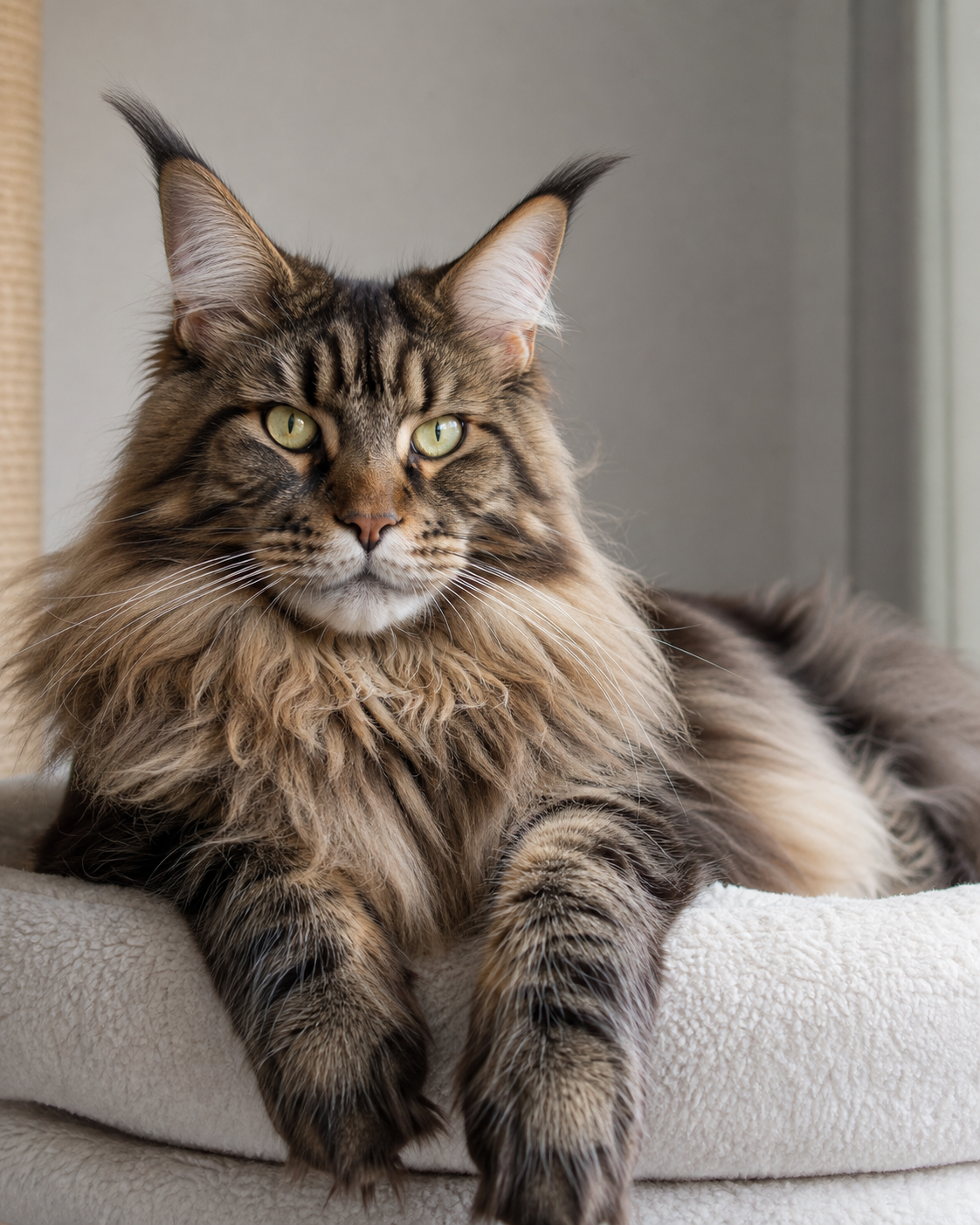
The Maine Coon has earned its reputation the old-fashioned way: by being hard to resist in real life. At first glance, people notice the dramatic tail, the tufted ears, and the thick, weather-ready coat. Spend a little more time with one, though, and a more important quality comes forward. Beneath that wild, woodland appearance is a cat known for warmth, intelligence, and a remarkably sociable nature.
Often described as a “gentle giant,” the Maine Coon occupies a rare middle ground in the cat world. It is large and sturdy without seeming aloof, playful without being frantic, and affectionate without always demanding center stage. For households looking for a cat with presence and personality, the breed offers a compelling combination of beauty and livability.
Built for weather, made for companionship
The Maine Coon’s physical traits tell a story of adaptation. Its coat is not just decorative; it developed to cope with cold climates. The fur tends to be shorter around the shoulders and longer underneath, creating a shaggy, layered look that helps protect the body. Add in the full, brush-like tail and ear tufts, and the result is a cat that looks prepared for winter even while lounging on a sofa.
That rugged exterior has helped define the breed’s image, but it can also be misleading. Maine Coons may look like self-sufficient forest cats, yet they are typically highly people-oriented. They often enjoy being near their humans, following household activity from room to room, and participating in daily routines. They are not always lap cats in the clingy sense, but they generally like company and do best when they are treated as part of family life rather than as decorative pets.
Their size contributes to their appeal as well. They are among the larger domestic cat breeds, with males commonly outweighing females by a noticeable margin. But size alone does not explain their popularity. What matters is the way that size is paired with a calm, adaptable disposition. The breed often feels substantial rather than fragile, which is one reason many families find them such reassuring companions.
A personality that keeps its kitten spirit
One of the most charming aspects of the Maine Coon is its slow path to maturity. Unlike many cats that seem to age out of kitten behavior fairly quickly, this breed can take several years to reach full physical development. That long adolescence often shows up in its temperament. Many Maine Coons retain a playful, curious streak well into adulthood and even old age.
This matters more than it may seem. A cat that stays mentally engaged tends to invite interaction, and Maine Coons often do exactly that. They enjoy climbing, exploring, watching birds, and turning ordinary objects into entertainment. They are active and inquisitive, but usually in a measured, thoughtful way rather than with the intensity of more high-strung breeds.
Their vocal style is another part of their charm. Rather than relying only on standard meows, many Maine Coons communicate through trills, chirps, and soft calls. These sounds can make them seem especially conversational, almost as if they are commenting on the household rather than simply asking for food. It is one of the traits that owners remember most vividly, because it reinforces the sense that this is a cat with a social instinct and a distinct voice.
Why families are drawn to them
The Maine Coon is often praised as a strong choice for homes with children and even for households that already include dogs or other pets. That reputation comes from a combination of tolerance, playfulness, and emotional steadiness. In the right environment, they tend to be adaptable rather than easily rattled.
Of course, no breed guarantee can replace individual temperament. A cat’s behavior will always reflect experience, socialization, and the quality of care it receives. Still, the Maine Coon’s broad popularity with families is no accident. Its affectionate but not overbearing nature suits modern homes where people want a pet that can engage, observe, and coexist without constant drama.
Another appealing quality is their evident love of activity. These cats often enjoy access to outdoor views, climbing spaces, and opportunities to simulate hunting through play. Some are famously intrigued by water, a trait unusual enough in cats to feel almost legendary. Whether that means tapping at a dripping faucet or investigating the bath, it adds another layer to their reputation for curiosity.
Care is manageable, but not optional
For all their easygoing qualities, Maine Coons are not a low-maintenance breed. Their coat needs regular attention to prevent tangles and reduce loose hair. While some descriptions suggest weekly grooming can suffice, many owners find that more frequent brushing keeps the coat in better condition, especially during shedding periods. A beautiful longhaired cat stays beautiful through upkeep, not luck.
Nutrition also deserves careful thought. Like all cats, Maine Coons are obligate carnivores and need a complete, balanced diet tailored to life stage, body condition, and activity level. Because this breed is large and can remain playful for years, owners should pay attention not just to what they feed but how much. A cat with a big frame should not automatically be allowed to become overweight.
Space and stimulation matter too. Maine Coons are not ornaments. They benefit from climbing trees, sturdy scratching posts, puzzle feeders, and windows where they can watch the world. Their intelligence and curiosity mean they thrive when the environment gives them something to do.
Health, history, and responsible ownership
The breed’s American roots are part of its mythology and appeal. It is widely associated with the state of Maine, where it developed from longhaired cats brought by seafarers and bred naturally with local cats. Over time, those early cats produced a hardy type well suited to harsh winters, and the Maine Coon emerged as a distinctly American breed with both working-cat resilience and show-cat glamour.
Yet admiration should always be paired with realism. Prospective owners need to be aware of health concerns linked to the breed, particularly hypertrophic cardiomyopathy and hip dysplasia. These are not minor footnotes. They are serious issues that make responsible breeding and informed adoption essential. Anyone seeking a Maine Coon should ask direct questions, request health information where available, and avoid treating pedigree status as proof of quality.
That balance between romance and responsibility is the right way to understand the Maine Coon. It is a striking cat with a rich backstory and a famously appealing personality, but it is also a long-term commitment that requires grooming, enrichment, and health awareness.
The enduring popularity of the Maine Coon makes sense because it satisfies both imagination and everyday life. It looks a little wild, sounds unusually expressive, and behaves with a friendliness that softens its imposing size. In a world full of cat breeds with one standout trait, the Maine Coon’s real strength is that it offers several at once—and wears them all with confidence.