Dogs of South Africa: From Africanis to Boerboel
From indigenous Africanis to sturdy Boerboels and friendly Labradors, South Africa’s dogs reflect a blend of heritage, utility and modern companionship across urban and rural life.
South Africa is a place of contrasts, and its dogs are no different: resilient landraces that have lived alongside people for generations, powerful farm guardians, and cosmopolitan companions that thrive in city apartments and coastal suburbs. Understanding the different types of dogs found across the country means looking at history, geography and the ways people use and value dogs today.
Indigenous and landrace dogs
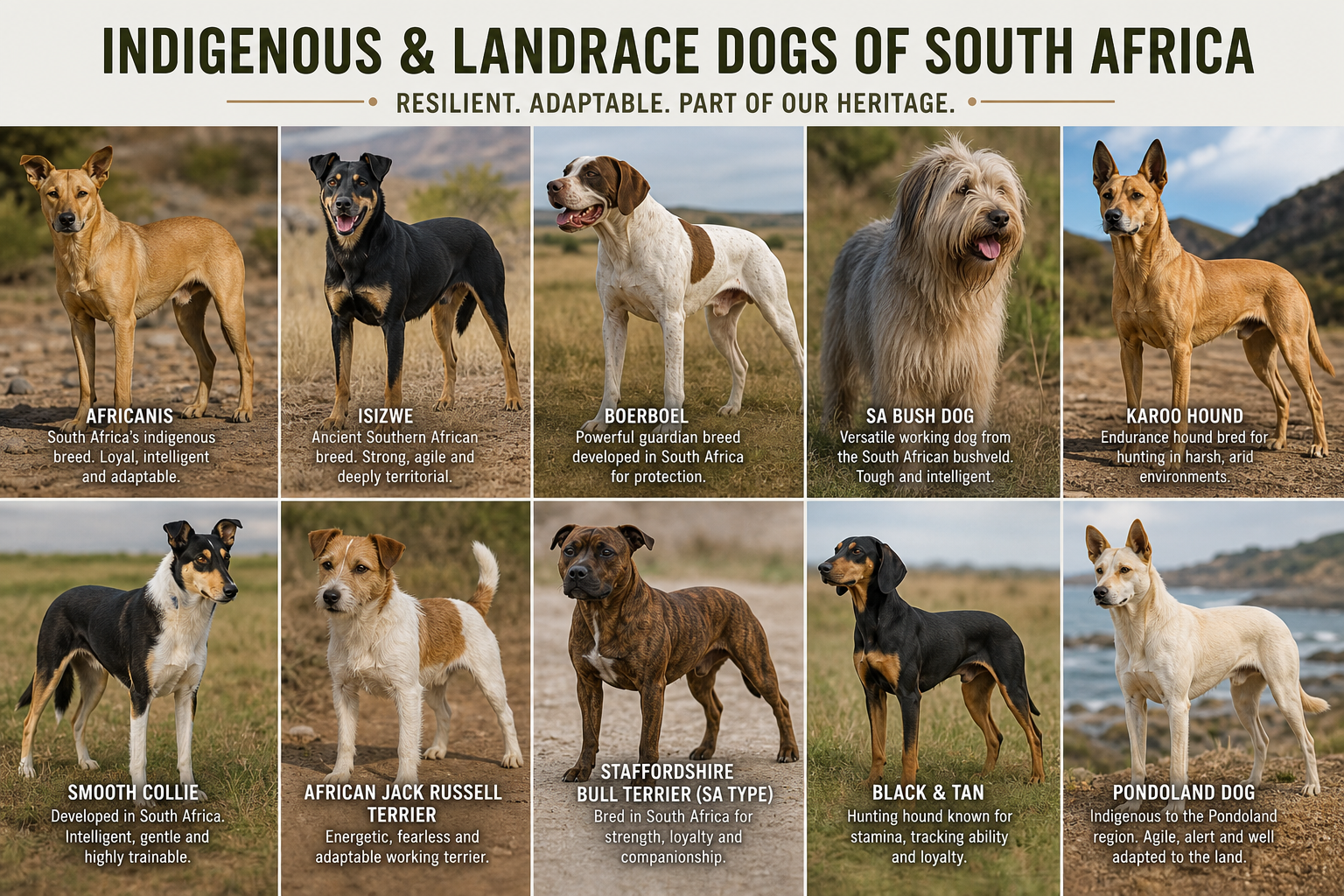
The Africanis is the best-known indigenous dog type in southern Africa. Not a single standardized breed but a diverse landrace, the Africanis has co-evolved with communities for centuries. These dogs are slim, athletic and highly adaptable; they cope well with heat, scavenging and a range of diets, while being alert watchful companions. Because they are not bred to rigid show standards, Africanis populations show wide variation in size, coat and color, reflecting local needs and natural selection.
Beyond the Africanis, South Africa hosts other pariah and village dogs whose ancestry blends Bantu, Khoisan and later European inputs. These community dogs often serve multiple roles: guardians, vermin controllers and family companions. Their social role and resilience make them an important part of rural life, but they are also vulnerable to neglect, disease and displacement — challenges that local rescue groups seek to address through vaccination, sterilization and community education.
Farm, working and guardian breeds
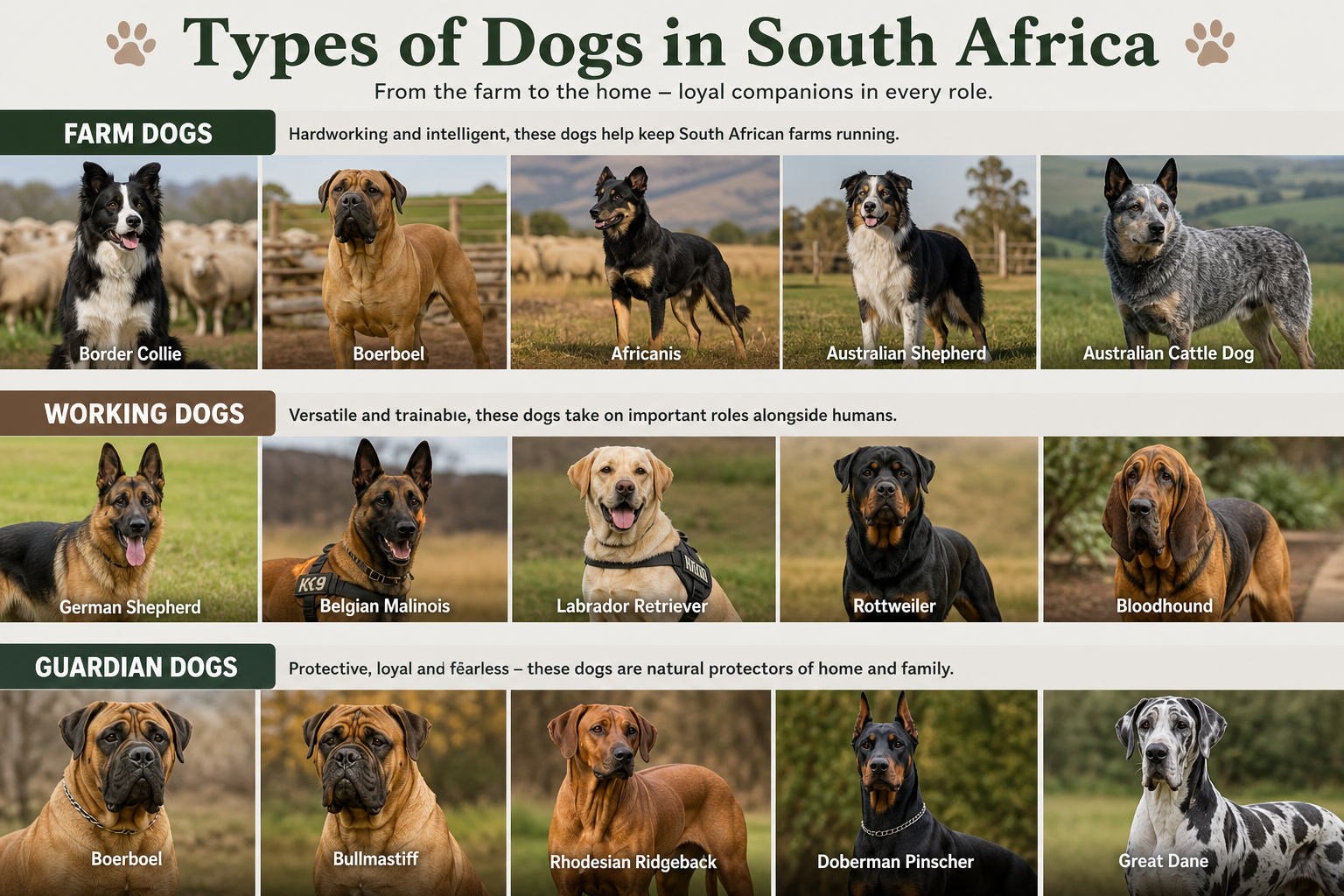
The demands of South African farms and rural homesteads have shaped a preference for robust working dogs. The Boerboel, a large mastiff-type dog developed by Dutch settlers and African stock, is emblematic of the South African farm dog: powerful, loyal and protective. Historically used to guard homesteads and livestock, a well-bred Boerboel needs consistent training and socialization to channel its strength safely.
Another dog with deep regional roots is the Rhodesian Ridgeback. Although it traces much of its documented development to what is now Zimbabwe, the Ridgeback is widely kept in South Africa for hunting and as a large, active companion. Known for the distinctive ridge of hair along its back, this breed combines endurance, intelligence and a strong prey drive, so owners should be prepared for exercise and firm leadership.
Herding and working breeds imported over the past century — Border Collies, Australian Kelpies and various sheepdogs — are also common on farms where livestock management is intensive. Their high energy and mental acuity make them invaluable in agricultural settings but can be challenging in urban homes without adequate stimulation.
Popular companion and sport breeds
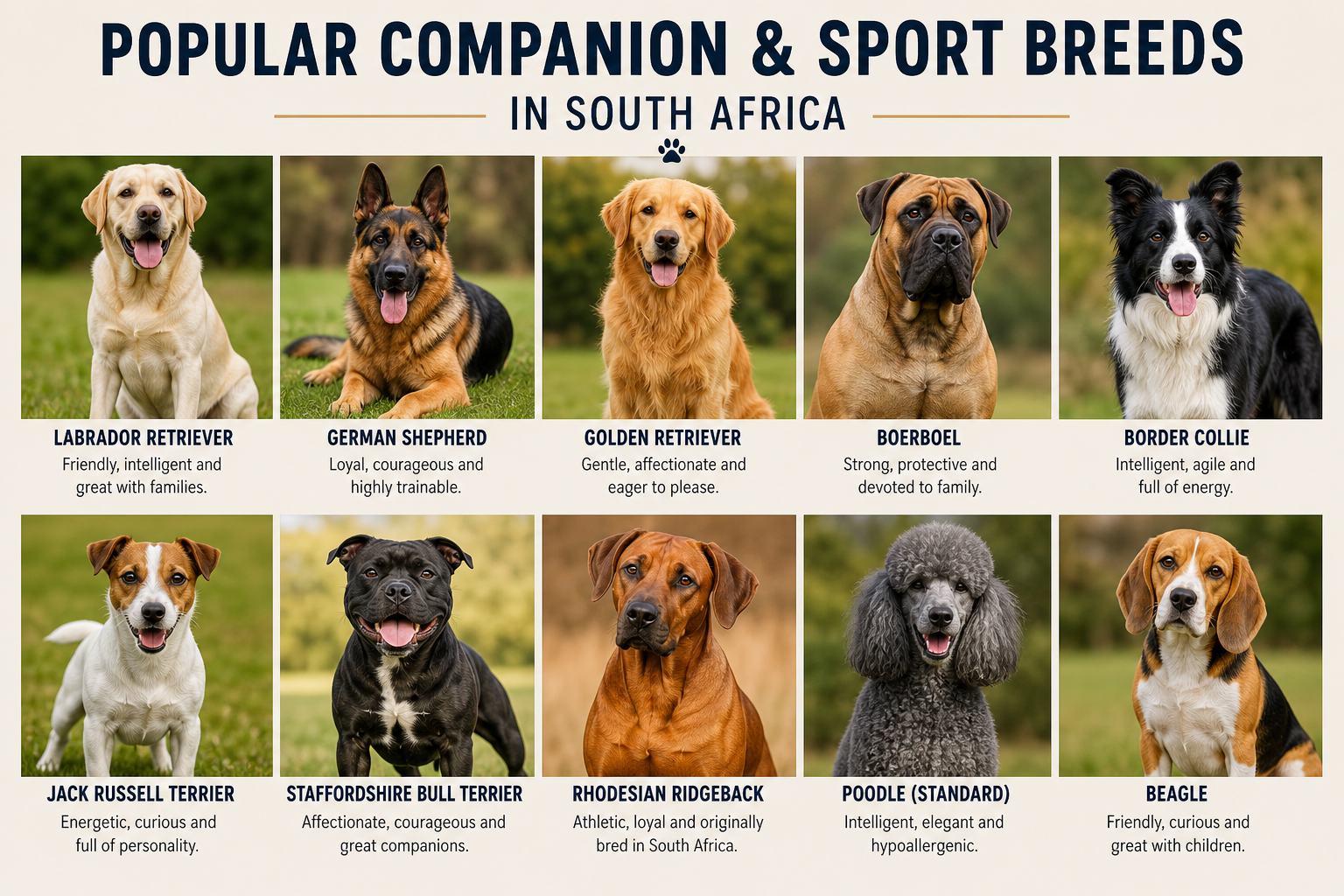
Urban and suburban South Africans often choose breeds familiar around the world: Labrador Retrievers, Golden Retrievers, German Shepherds, Jack Russell Terriers and Staffordshire Bull Terriers are all common. Labradors remain a favorite for families because of their steady temperament, versatility and usefulness as service and assistance dogs.
Smaller breeds and mixes fill the role of apartment and lap dogs in towns and cities. Mixed-breed rescue dogs, often called “munge” in local parlance, are widespread and beloved for their unique personalities and resilience. There is also a growing interest in sporting and agility activities, which has helped breeds like the Border Collie, Whippet and various terriers remain popular among active owners.
Health, culture and responsible ownership
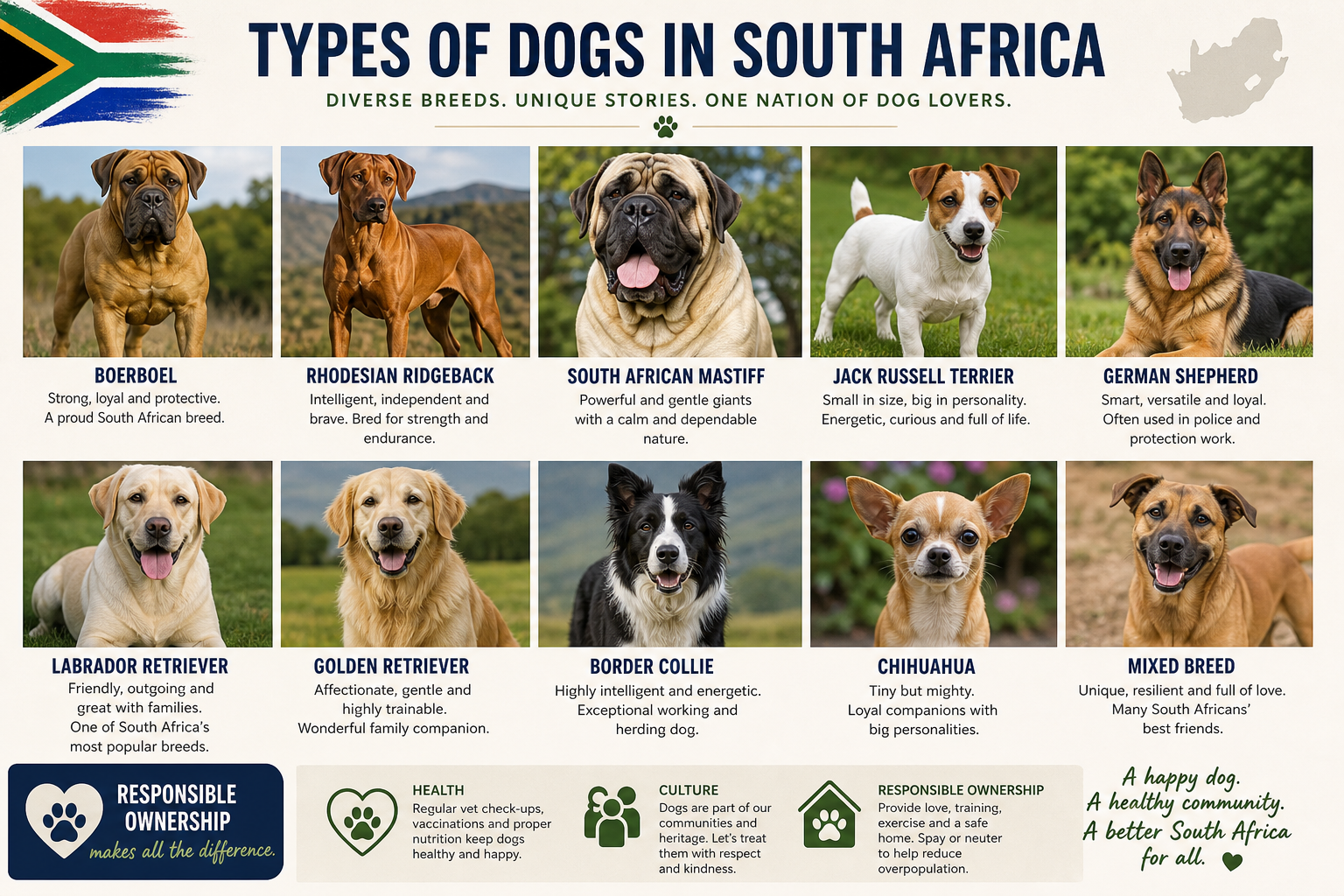
South Africa’s climate and ecology influence dog health considerations: ticks, heartworm and tick-borne diseases like ehrlichiosis are significant concerns, especially in rural areas. Regular preventative care — tick control, heartworm prevention, vaccinations and deworming — is essential. Veterinary access is uneven across regions, so public health campaigns and mobile clinics play a crucial role in protecting both dogs and their communities.
Culturally, dogs occupy many roles: working partners, status symbols, companions and community members. That variety creates divergent expectations — from strict working standards on farms to pampered city pets — and can lead to tension when stronger, working-bred dogs end up in unsuitable urban environments. Education about breed needs, spay/neuter programs and proper training can reduce abandonment and behavioral problems.
Adoption is an ethical and increasingly popular choice. South Africa supports a network of rescue groups and shelters; adopting a mixed-breed or rehabilitated community dog often yields a loyal and healthy companion, while also easing pressure on shelters.
Preserving heritage and looking ahead
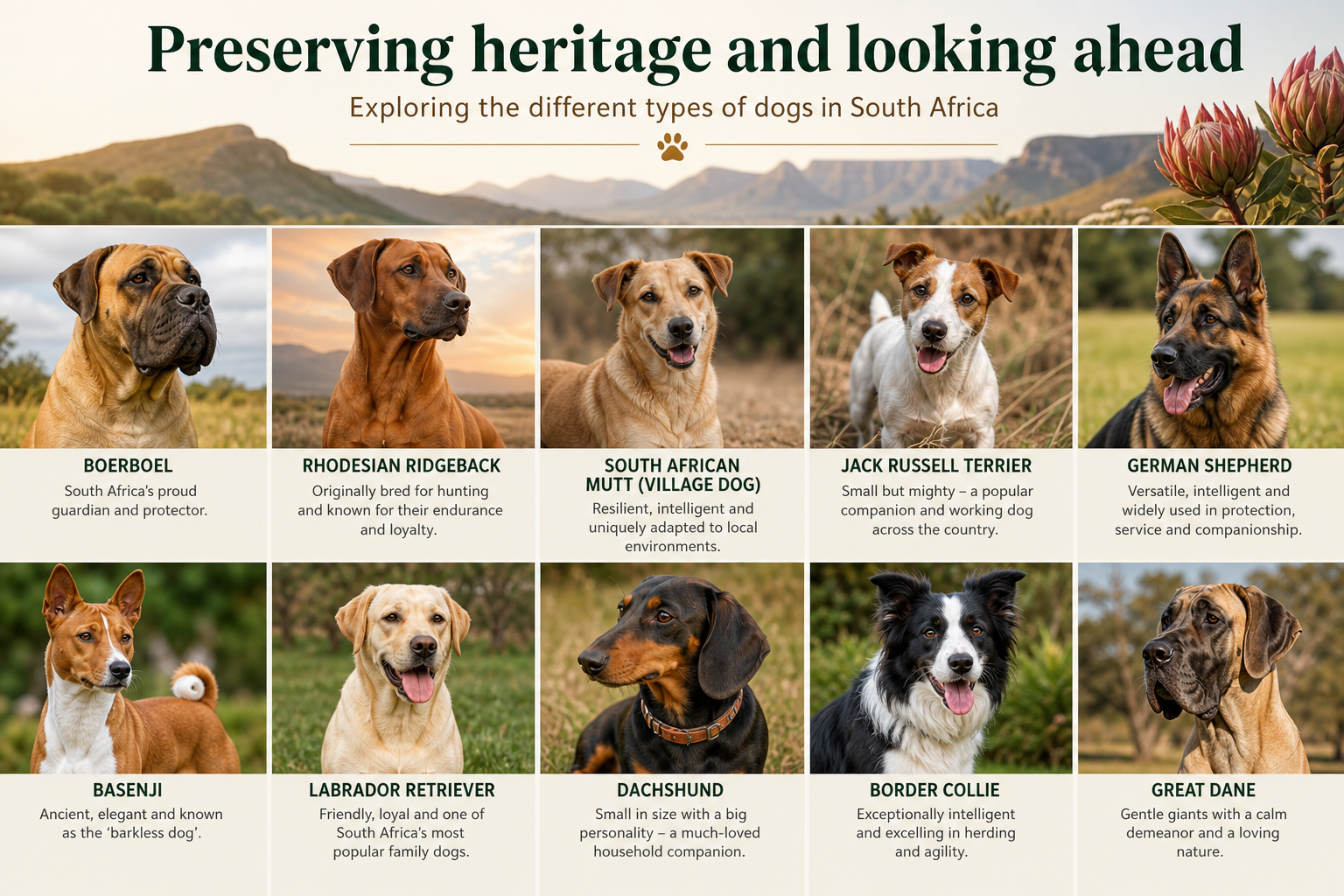
There is renewed interest in preserving indigenous types like the Africanis, not as show breeds but as culturally and genetically important landraces. Conservation-minded breeders and academic projects aim to document and protect that diversity while promoting humane management. Balancing heritage preservation with animal welfare — vaccination, responsible breeding and reduced unnecessary suffering — is the challenge ahead.
Whether you meet a vigilant village dog on a gravel road, a massive Boerboel guarding a farmhouse, or a Labrador playing fetch in a city park, South African dogs reveal the country’s layered history and contemporary priorities. Celebrating that variety means recognizing local needs, supporting responsible ownership and valuing both the traditional and the modern roles dogs play in South African life.