
The Quiet Power of Not Knowing
Not knowing can feel like failure, but it is often the hidden starting point of curiosity, growth, and real understanding.
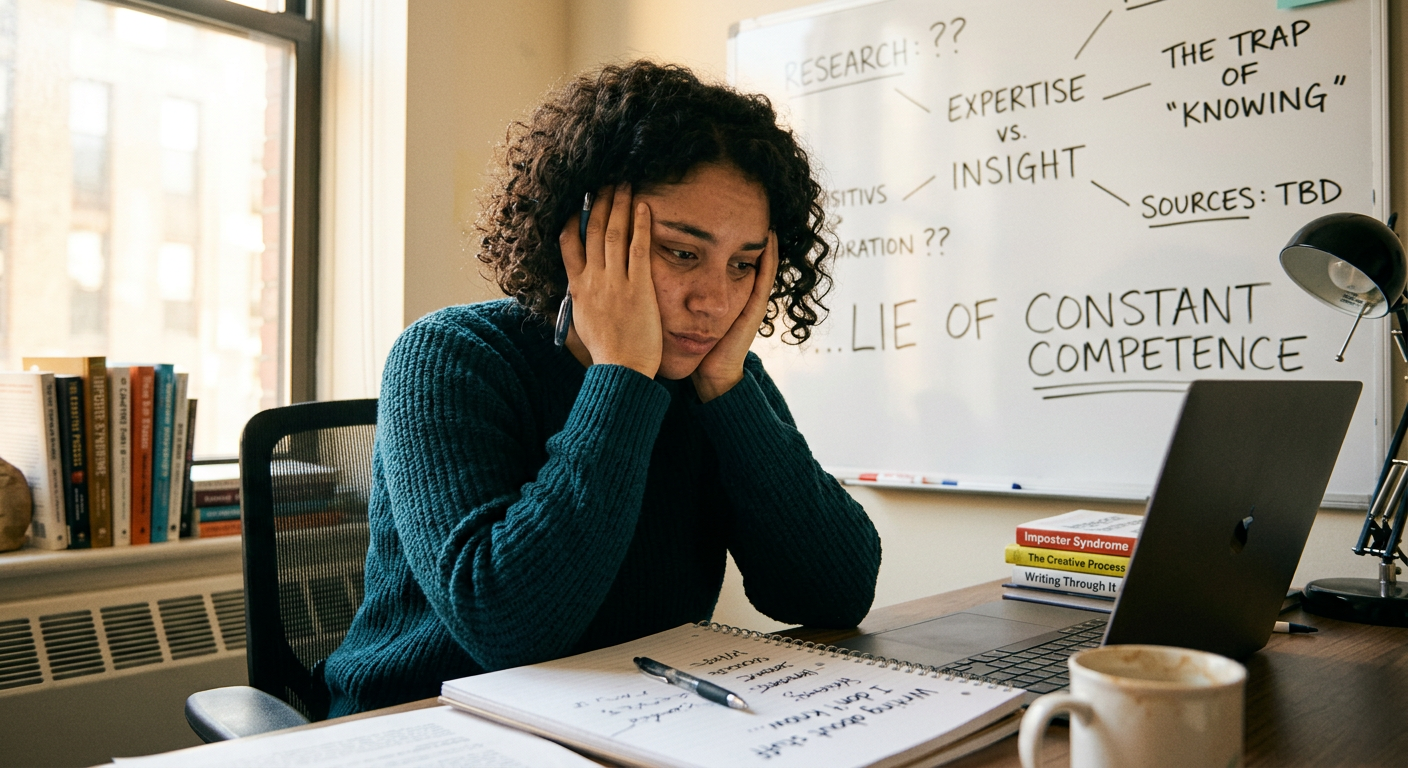
Most people are taught to fear ignorance. From childhood onward, we are rewarded for having the right answer, speaking confidently, and appearing certain even when certainty is thin. So when we run into something we do not understand, the first reaction is often embarrassment. We feel behind, exposed, or somehow less capable than everyone else in the room.
But not knowing is not a personal flaw. It is the normal condition of being alive in a world that is larger, stranger, and more complex than any one mind can hold. In fact, much of what makes a person interesting, adaptable, and wise begins with the simple admission: I do not know.
That sentence sounds small. It is not. It can be the beginning of education, humility, creativity, and change.
The Lie of Constant Competence
Modern life rewards performance. At work, online, and even in casual conversation, people often feel pressure to project competence at all times. Social media makes this worse by turning confidence into a kind of currency. Every opinion arrives polished. Every take sounds final. Everyone appears informed, certain, and one step ahead.
Of course, this is mostly theater. Behind the performance, people are confused about money, relationships, politics, technology, their own emotions, and what to do next with their lives. They improvise. They guess. They borrow language from others and hope it holds together.
Yet many still cling to the idea that adulthood means having answers. It does not. Adulthood often means learning how to function responsibly while remaining aware of how much you do not fully understand. The strongest people are not those who know everything. They are the ones who can recognize the limits of their knowledge without collapsing into insecurity.
Pretending to know has costs. It closes off learning. It hardens opinions before they are tested. It makes questions feel dangerous. Worst of all, it can trap a person inside a shallow version of themselves, one built on image instead of growth.
Curiosity Begins Where Certainty Ends

Every real education starts in discomfort. Before understanding comes confusion. Before mastery comes awkwardness. Before insight comes the irritating realization that your first assumption was incomplete or wrong.
This is true whether you are learning physics, cooking, love, grief, or how to repair a leaking sink. The door only opens when you admit you are outside the room.
Curiosity is often romanticized as a charming personality trait, but in practice it requires vulnerability. To be curious, you must risk looking uninformed. You must ask questions that may seem obvious to others. You must tolerate the temporary instability of not yet knowing where the answer will lead.
That is one reason many people stop asking questions as they get older. It is not because they have become fully informed. It is because they have become more protective of appearing informed. Pride replaces wonder. The performance of knowledge replaces the pursuit of it.
But a curious person keeps moving. They read beyond headlines. They ask follow-up questions. They let new information revise old beliefs. They understand that being corrected is not a humiliation but an upgrade. In that sense, not knowing is not a dead end. It is active terrain.
Ignorance Can Be Honest or Chosen
There is an important distinction between innocent ignorance and willful ignorance. The first is unavoidable. No one begins life knowing economics, history, medicine, or the private pain another person carries. The second is a decision to avoid learning because the truth feels inconvenient, threatening, or demanding.
This distinction matters. We should not shame people for what they have not yet had the chance to learn. But we should be honest about the responsibility that follows once ignorance is pointed out. If evidence is available, if voices have spoken, if experience has widened the field, then refusing to engage is no longer innocence. It becomes negligence.
In other words, not knowing is human. Staying committed to not knowing, especially when the stakes affect others, can become moral laziness.
That principle applies in personal life too. Many people say they do not understand their own habits, fears, or recurring mistakes. Sometimes that is true. Sometimes it is also a way of avoiding the work of self-examination. Growth requires more than confessing confusion. It requires investigating it.
The Freedom of Saying “I Don’t Know Yet”
 Admitting what you do not know opens the door to genuine curiosity and learning.
There is something profoundly liberating about laying down the mask and dropping the act. The moment you say, “I don’t know,” you open up a rare and vital kind of space: space to truly listen, space to genuinely learn, and space to be quietly, powerfully changed by whatever you encounter.
Adding the word “yet” can matter too. “I don’t know yet” preserves humility without surrendering possibility. It acknowledges the present limit without turning it into a permanent identity.
This mindset can transform how people move through the world. Instead of treating ignorance as evidence of inadequacy, they begin to treat it as a map. Wherever confusion appears, there is a direction for attention. Whatever feels vague or intimidating may be pointing toward the next area of growth.
That is useful not only intellectually but emotionally. Many people carry shame about what they were never taught: how to manage money, how to communicate clearly, how to rest, how to grieve, how to recognize manipulation, how to set boundaries, how to ask for help. Shame says you should have known already. A healthier voice says you can learn now.
A Better Measure of Intelligence
Perhaps intelligence is measured less by how much information a person can display than by how flexibly they relate to what they do not know. Can they remain open without becoming gullible? Can they change their mind without feeling erased? Can they ask questions that lead somewhere real? Can they live with ambiguity long enough for a deeper understanding to emerge?
These are not flashy skills. They rarely go viral. But they shape character in ways trivia never will.
A person who can admit uncertainty is often more trustworthy than one who speaks with relentless confidence. Certainty can be seductive, but it is not always earned. Humility, by contrast, suggests contact with reality. It suggests a person has looked at the complexity of things and chosen honesty over posture.
In a culture obsessed with quick takes and instant expertise, that kind of honesty is almost radical.
Not knowing will always be part of life. New technologies will arrive. Old beliefs will break. Other people will remain partly mysterious. You will outgrow one understanding of yourself and stumble into another. The point is not to eliminate ignorance completely. That is impossible. The point is to meet it well.
To meet it with seriousness instead of panic. With curiosity instead of defensiveness. With patience instead of shame.
There is dignity in learning out loud. There is courage in asking what others only pretend to understand. And there is real power in recognizing that ignorance, faced honestly, is not the opposite of intelligence. It is where intelligence begins.