
SEO in the Age of AI Search: What Still Works and What Matters More Now
Search is changing fast, but the winning SEO playbook still starts with fundamentals and evolves with smarter structure, authority, and usability.
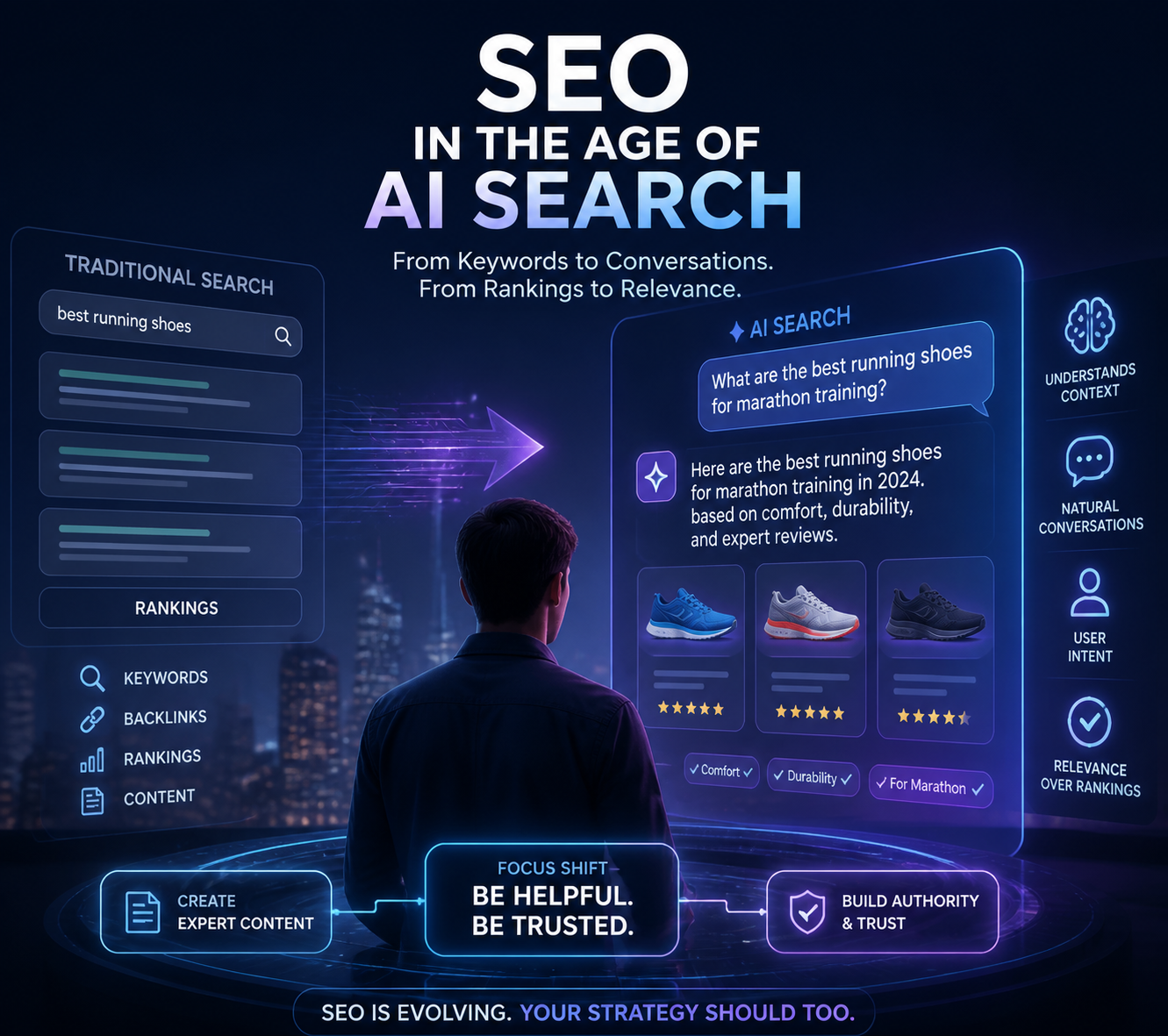
Search engine optimization is no longer just about blue links on a results page. Today, brands compete for visibility across traditional rankings, featured snippets, AI summaries, and answer engines that assemble responses from many sources at once. That shift has not made SEO obsolete. If anything, it has made disciplined SEO more valuable.
The biggest mistake businesses can make right now is assuming AI search demands an entirely new strategy. It doesn’t. The foundations still matter: a crawlable site, clear information architecture, strong content, and signals of trust. What has changed is the way those foundations are rewarded. Search systems increasingly favor content that is easy to retrieve, easy to verify, and clearly connected to a broader web of authority.
The new search landscape still rewards old-school discipline
For all the excitement around AI-generated answers, the core logic of search remains surprisingly familiar. Search engines and AI systems both need to find your content, understand it, assess its relevance, and decide whether it deserves visibility. If your pages are technically weak, confusingly organized, or duplicative, your chances shrink before your ideas even enter the conversation.
That is why technical SEO remains the first priority. Broken pages, crawl barriers, poor indexation, conflicting URL versions, and weak site structure all undermine performance. These are not glamorous fixes, but they are often the highest-leverage ones. A polished article cannot perform if the site around it sends mixed signals.
Duplicate content is especially costly because it divides authority and creates ambiguity. When multiple versions of the same page exist, search engines may struggle to determine which one should rank. In an AI-driven environment, ambiguity is even more dangerous. Systems that summarize the web prefer confidence. If your site presents the same idea in scattered or competing forms, it becomes less reliable as a source.
Internal linking is another underrated fundamental. It tells search engines which pages matter most, how topics relate to each other, and where deeper expertise lives. For users, it creates a coherent path. For search systems, it creates context. In a world where content is increasingly interpreted as part of a knowledge graph rather than a stack of isolated pages, internal links act like connective tissue.
Content must be written for humans and legible to machines
The rise of AI search has revived an old truth: clear writing wins. Content that performs well now is not just informative; it is structured in a way that makes extraction easy. That means direct answers near the top of a section, useful subheadings, concise definitions, and logical progression from basics to nuance.
This does not mean writing robotic copy. It means respecting how modern retrieval works. AI systems look for passages that answer a question cleanly, compare options, define concepts, or explain processes. A page buried under vague introductions and filler may still rank, but it is less likely to be cited in summaries or surfaced as a trusted explanation.
One useful shift for content teams is to think beyond a single keyword. The strongest pages often address a topic from several angles: what it is, why it matters, how it works, common mistakes, alternatives, and practical next steps. This broader coverage increases relevance and makes the content more useful to both readers and retrieval systems.
Refreshing old content is also one of the smartest moves in modern SEO. Many sites already possess pages with residual authority, backlinks, and ranking history. Updating those pages with fresher examples, stronger structure, clearer answers, and new supporting data can produce faster gains than publishing something entirely new. In a search environment that prizes recency and accuracy, stale content quietly becomes a liability.
Authority is becoming more distributed and more visible

SEO used to focus heavily on what happened on your own website. That is no longer enough. Search engines and AI systems increasingly infer authority from the broader web: mentions, citations, reviews, expert attribution, and consistency of reputation across platforms.
That raises the importance of building recognizable expertise. For topics involving health, finance, law, or other high-stakes decisions, credibility is not optional. Clear author bios, expert review, cited sources, and transparent editorial standards help establish trust. Even outside those sensitive categories, audiences and algorithms both reward content that sounds informed rather than generic.
Brand mentions matter too, even when they are not classic backlinks. If respected sites reference your company, quote your team, or discuss your research, those signals can strengthen your visibility over time. AI systems, in particular, tend to reflect the sources and brands that show up repeatedly across the web’s authoritative corners.
This suggests a broader editorial strategy: publish material worth citing. Original research, sharp explainers, opinionated industry analysis, and genuinely useful tools all create reasons for others to mention you. The future of SEO is not just optimization. It is publishability.
User experience is no longer a side issue
A fast, stable, intuitive website does more than please visitors. It supports every SEO outcome that follows. Slow pages reduce engagement. Confusing layouts weaken trust. Mobile friction increases abandonment. These usability failures may not always appear dramatic in analytics, but they quietly drain performance.
Core Web Vitals and related experience signals should be understood in that broader context. They are not merely technical metrics to satisfy. They are indicators of whether your site feels dependable. Search engines want to surface results that users can actually use. AI search may answer more questions directly, but when a user clicks through, the destination still matters.
Structured data also deserves more attention than it often gets. Schema markup helps search systems interpret your content with greater precision, whether that content is a product, article, FAQ, review, organization, or event. It does not guarantee visibility, but it improves clarity. And clarity is a competitive edge.
The smartest SEO strategy is prioritization, not panic
The temptation in every new search era is to chase every tactic at once. That usually leads to scattered effort and mediocre results. A better approach is phased execution.
Start with the essentials: technical health, canonical consistency, duplicate cleanup, and internal linking. Then move to high-impact content work: clearer structure, broader topic coverage, snippet-friendly formatting, and systematic updates to aging pages. After that, invest in authority: expert contributions, digital PR, external mentions, and stronger brand signals.
For larger organizations, advanced approaches like programmatic SEO can unlock scale, but only when the basics are already strong. Automation amplifies quality when quality exists. Otherwise, it simply spreads thin content faster.
The deeper lesson is reassuring. SEO has not become unrecognizable in the AI era. It has become less tolerant of sloppiness. The brands that win will be the ones that make their content easy to find, easy to trust, easy to understand, and genuinely worth referencing.
In other words, the future of search belongs to websites that are not only optimized, but organized, credible, and useful.